What Is SuDS? A Plain English Guide to Sustainable Drainage

What Are SuDS?
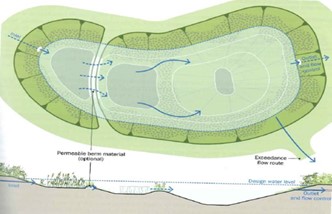
SuDS stands for Sustainable Drainage Systems (sometimes also called Sustainable Urban Drainage Systems). They are drainage features designed to manage surface water runoff from developed land in a way that mimics natural drainage processes — slowing water down, storing it temporarily and allowing it to infiltrate into the ground where possible.
Before development, most rainfall is absorbed by grass, vegetation and soil. After development, roofs, roads and hardstanding prevent this natural absorption, causing rapid runoff that overwhelms drains and increases flood risk downstream. SuDS aim to address this by managing surface water on or near where it falls.
Why Do Planning Applications Need SuDS?
The National Planning Policy Framework (NPPF) requires that development gives priority to Sustainable Drainage Systems and that surface water runoff is managed as close to the source as possible. Lead Local Flood Authorities (LLFAs) are statutory consultees on major planning applications and will object if adequate SuDS provision has not been demonstrated.
Almost all planning applications in England and Wales that involve new impermeable surfaces (roofs, roads, car parks, hardstanding) now require a SuDS drainage strategy demonstrating compliance with NPPF and local SuDS standards.
Types of SuDS
Infiltration SuDS
SuDS that allow water to drain into the ground: soakaways, infiltration trenches, permeable paving. The first choice in the SuDS hierarchy where ground conditions allow.
Attenuation SuDS
SuDS that store water temporarily and release it slowly: ponds, wetlands, geocellular storage tanks, above-ground basins. Used where infiltration is not possible.
Conveyance SuDS
SuDS that slow and convey water: swales (shallow grassed channels), filter drains, green roofs. Often used in combination with attenuation features.
Source Control
Measures that prevent runoff at source: green roofs, rainwater harvesting, permeable paving. Reduce the volume of water that needs to be managed downstream.
The SuDS Hierarchy
CIRIA C753 (the SuDS Manual) requires drainage designers to work through a SuDS hierarchy, giving priority to options higher up the hierarchy before moving to lower-priority options:
- Infiltration on site (soakaways, permeable paving, infiltration trenches)
- Discharge to a surface water body (watercourse, pond)
- Discharge to a surface water sewer or highway drain
- Discharge to a combined sewer (last resort only)
Each option higher in the hierarchy must be assessed and ruled out before the next can be adopted. LLFAs will object if applicants jump to connecting to a sewer without demonstrating that infiltration and surface water body discharge options have been properly considered. Need a SuDS drainage strategy for your planning application? Contact us for a free quote.
Need a SuDS drainage strategy? We prepare planning-ready SuDS drainage strategies and detailed drainage designs across England and Wales.
Get a Free Quote Drainage service →All Services & Resources
Everything you need for flood risk, drainage and environmental planning consultancy across England and Wales.
Flood Risk
Drainage
Other Services
Areas Covered
Need a Flood Risk or Drainage Consultant?
Planning-ready FRAs and SuDS drainage strategies across England and Wales. Free quote within 24 hours.
Get a Free QuoteOr contact us directly: 07826 705389 •